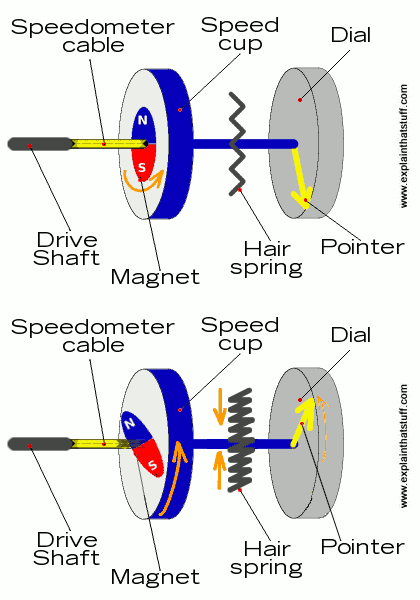
So does anybody in this thread have any actual idea how a mechanical speedometer works? They aren't filled with gears inside like a watch or clock. It's a spinning magnet creating eddy currents in a cup that then tightens against a spring. There are so many "mechanical" factors at play that there is almost no such thing as an accurate mechanical speedometer.
The modern SAE standard (J1226) is 4% accuracy for electronic speedometers. That is 4%+ or - over the entire range. That means that in order to stay somewhat accurate some manufacturers will cheat the speedo so it reads slower at lower speeds so that when you get to much higher speeds it is reading fast but still within that 4% range. So it is entirely possible that a speedometer can read slower at lower speeds and then read higher later.
Here is a speedometer range chart for Scion Vehicles to illustrate my point.

The old standard...well...I don't think there was one. I mean there were SAE standards from the 70's and 80's that addressed factors that affect a mechanical speedo, but I think the industry rule was 8-10% over the range. Keep in mind these are voluntary standards and not required so mfgs were free to do anything they liked.
A calibrated speedo like those installed in a police vehicle are "calibrated" within a range. Usually that range matches up with speed enforcement range which is 40mph to 90mph. After that they begin to read high as well, and below 40mph will read low. But in that range they are looking for a 1-2% variance (so it isn't exactly a precise measurement tool either). Since they are now electronic in the modern age, as they get older corrosion begins to increase the resistance and some of them begin to read low in general. Unless they are serviced regularly they are not "accurate".
If you want an "accurate" speedometer, it isn't going to be found by calibrating the stock honda mechanical speedometer (or any mechanical speedometer for that matter). The most accurate speedometer type available now is a GPS speedometer, because it literally takes a measurement of distance over time in real time. They are however susceptible to signal strength so no system is without flaws. The other solution is something like a magnet or optical pick up speedometer that you can calibrate your self. It won't be 100% accurate across the range, but you can make it fairly accurate across the range where you would be looking at a speedometer (35mph-80mph). Plus you can readjust it for changes in tire height (as your tires wear or as you change to new rubber).
here is some basic reading for you people:
http://www.explainthatstuff.com/how-speedometer-works.htmlhttps://www.thrillist.com/cars/your-speedometer-is-wrong-speed-calibration-inaccuracy-in-german-american-and-japanese-cars


